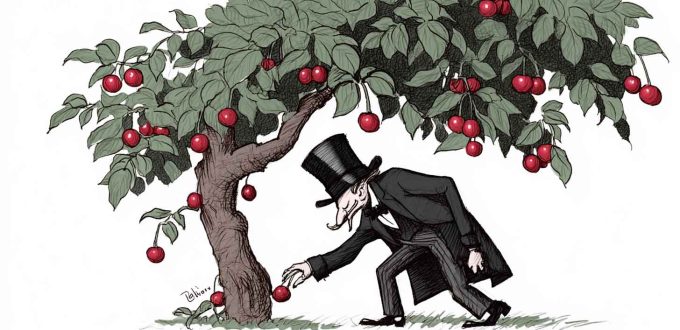
How Selective Facts Create Misleading Truths
Imagine someone tells you, “This company had its best quarter ever—profits are up 40%!”
Sounds impressive, right?
But what if they forgot to mention that the previous three years were losses… and this “record quarter” still doesn’t make up the difference?
Welcome to the cherry-picking fallacy—one of the most common ways people use true facts to tell a misleading story.
What Is Cherry Picking?
Cherry picking happens when someone selects only the evidence that supports their position while ignoring evidence that contradicts it.
Instead of presenting the full picture, they highlight the most favorable data points—like picking only the ripest cherries from a tree and leaving the rest behind.
The result?
A conclusion that may be technically supported by some facts… but not by all the relevant facts.
Why It Works
Cherry picking is effective because it doesn’t look like deception.
There’s no obvious lie. The data presented is often real and accurate. That’s what makes it persuasive.
Most people don’t have the time—or access—to dig deeper into missing information. So when they hear a compelling statistic or example, they assume it represents the whole picture.
But it rarely does.
A Real-World Example (and Why It’s So Memorable)
A well-known case comes from debates over climate change.
At various points, some commentators have pointed to a short time span—often a decade or less—to argue that global warming had “stopped” or “paused.” For example:
“Temperatures haven’t increased significantly over the last 10 years—so global warming isn’t happening.”
At first glance, that sounds like a data-driven claim.
But it’s a classic case of cherry picking.
Here’s why:
- Climate trends are measured over long time scales (decades, not years)
- Short-term fluctuations can occur due to natural variability (like El Niño or volcanic activity)
- When you look at the full dataset over many decades, the overall warming trend is clear
By selecting a narrow window of time that appears flat, the argument ignores the broader and more relevant evidence.
It’s like taking one calm moment during a storm and claiming the storm has ended.
Common Forms of Cherry Picking
Once you recognize it, you’ll see cherry picking everywhere:
- Business Reporting
Highlighting one strong quarter while ignoring long-term decline - Politics
Using a single statistic to support a policy while omitting conflicting data - Advertising
Promoting one positive review while ignoring dozens of negative ones - Health Claims
Citing one study that supports a product while ignoring the larger body of research
Each example presents a slice of truth—but not the whole.
Cherry Picking the Bible
I almost don’t know where to begin here – cherry picking is sadly one of the most common methods of “proving” something from the Bible. The Bible is a huge collection of writings compiled over centuries by many different writers and groups. Searching diligently, you can find a single passage that supports almost anything – child or spouse abuse, polygamous marriage, putting disobedient teenagers to death.
What is Cherry Picking?
Cherry picking involves taking verses out of their original context to support personal beliefs or agendas. This practice can lead to misunderstandings about the Bible’s teachings and can distort the intended message of scripture. It is essential to recognize that the Bible is a cohesive narrative, and understanding it requires looking at the entirety of its content rather than isolated verses.
Examples of Cherry Picking
- Misinterpretation of Verses: For instance, some may quote Philippians 4:13, “I can do all things through Christ who strengthens me,” to justify personal ambitions without considering the broader context of humility and reliance on God.
- Ignoring Difficult Teachings: Many Christians may focus on verses that emphasize God’s love and grace while neglecting teachings about accountability, repentance, and the call to live a life of sacrifice.
- Selective Application: The practice can also manifest in discussions about social issues, where individuals may highlight verses that support their stance while disregarding others that promote compassion, justice, and love for all.
Why It’s Dangerous
Cherry picking distorts decision-making.
When people base conclusions on incomplete information:
- They may support policies that don’t actually work
- Invest in products or ideas that aren’t reliable
- Form opinions based on misleading impressions
It creates confidence without accuracy.
How to Spot (and Challenge) It
When you encounter a strong claim backed by selective evidence, ask:
- What information might be missing?
- Is this a full dataset or just a snapshot?
- Are there other studies, timeframes, or examples that tell a different story?
One simple question can be powerful:
“What happens if we zoom out?”
Often, the answer changes everything.
The Bottom Line
Cherry picking is persuasive because it uses real facts—but only the convenient ones.
It’s not about false information. It’s about incomplete information presented as complete.
And once you learn to look for what’s left out—not just what’s included—you start to see the full picture.
Because truth isn’t just found in the best examples…
it’s found in all of them.