When Two Things Are Treated as Equal (But Aren’t)
“Both sides are just as bad.”
It’s a phrase that sounds fair, balanced—even wise. But sometimes, it hides a serious flaw in reasoning.
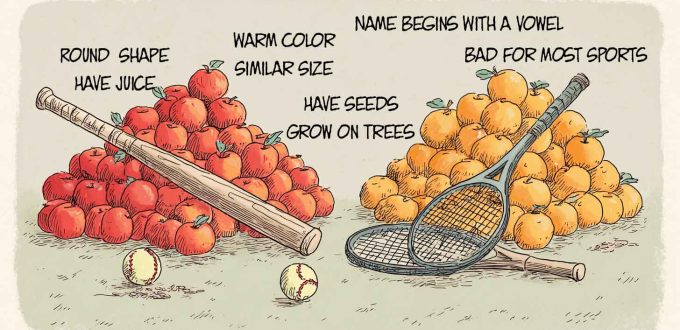
This is the false equivalence fallacy: treating two things as if they are essentially the same, even when important differences make the comparison misleading.
What Is False Equivalence?
False equivalence happens when someone compares two things as equal in value, impact, or meaning—despite key differences that make the comparison inaccurate.
Instead of:
“These two situations have some similarities, but also major differences…”
You get:
“They’re basically the same.”
The problem isn’t comparing—it’s oversimplifying the comparison to the point of distortion.
Why It Works
False equivalence appeals to our desire for fairness and balance.
We like to believe that:
- Every issue has two equal sides
- Taking a middle position is reasonable
- Symmetry equals truth
So when someone frames two things as equivalent, it feels thoughtful—even when it isn’t accurate.
A Real-World Example (and Why It’s So Entertaining)
Imagine a workplace scenario.
- One employee occasionally shows up five minutes late.
- Another employee falsifies expense reports.
A manager says:
“Both of you need to take responsibility—you’ve each broken the rules.”
Technically true. Both did break rules.
But are those actions equivalent?
Not really.
One is a minor punctuality issue. The other is a serious ethical violation with potential legal consequences.
Treating them as equal creates a misleading sense of balance. It smooths over important differences in severity and impact.
What makes this example entertaining is how absurd it feels once you pause and compare the two. Yet similar reasoning shows up all the time in more serious contexts.
Common Forms of False Equivalence
You’ll see this fallacy in many areas:
- Politics
Equating minor missteps with major scandals - Media Coverage
Presenting unequal evidence as equally credible for “balance” - Business Decisions
Treating small errors and major failures as the same - Everyday Arguments
“You forgot to call me, and I forgot your birthday—so we’re even”
Each example flattens meaningful differences.
Why It’s Dangerous
False equivalence distorts judgment.
When unequal things are treated as equal:
- Serious issues may be minimized
- Minor issues may be exaggerated
- Accountability becomes unclear
It can create the illusion of fairness while actually obscuring the truth.
How to Spot (and Challenge) It
When you hear a comparison, ask:
- Are these situations truly comparable?
- Do they differ in scale, intent, or impact?
- What important details are being ignored?
A helpful response is:
“Those aren’t really the same—here’s why…”
Pointing out the differences often breaks the illusion.
The Bottom Line
False equivalence takes the complexity of reality and forces it into a neat—but misleading—symmetry.
Not everything is equal. Not every mistake carries the same weight.
And recognizing that difference is essential for clear thinking.
Because fairness isn’t about treating everything the same…
it’s about seeing things as they actually are.